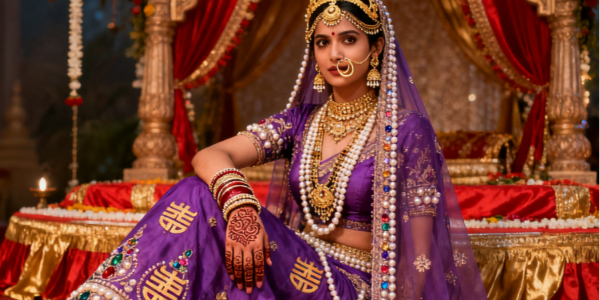

Traditional festival costumes have never been merely "clothing", but rather concrete carriers of culture, core elements of festival rituals, and important bonds for people to engage in dialogue with history and resonate with culture.
The "Modern Transformation" of traditional festival clothing: Innovation in Inheritance, Bringing Culture Closer to Life. With the development of The Times, traditional festival clothing is no longer "exhibits in museums", but gradually enters modern life. On the basis of retaining the cultural core, it integrates modern design concepts and becomes a "trendy item" favored by young people, making the celebration methods of traditional festivals more diverse. 1. Style simplification: Making traditional clothing suitable for modern Settings. Traditional festival clothing often has problems such as "cumbersome to wear" and "inconvenient for movement". To make more people willing to wear and more convenient to wear, designers have simplified the traditional styles. For instance, the Tang suits for the Spring Festival are no longer the traditional long front-opening styles. Instead, short Tang suit jackets and sweatshirts have been introduced, which can be worn with jeans or casual pants. They not only retain the traditional elements of buttons and stand-up collars but also conform to modern daily dressing habits. During the Mid-Autumn Festival, Hanfu has also seen the emergence of "Han-themed fashion" - integrating the collar and cuff designs of Hanfu into shirts and dresses, such as "cross-collar shirts" and "ruqun style dresses". These can be worn during daily commutes, and when paired with traditional accessories at Mid-Autumn Festival gatherings, one can easily switch to the "festival mode". This "simplified yet not simplistic" design enables traditional festival clothing to no longer be confined to "specific occasions", but to become practical garments that can be worn on a daily basis and celebrated. 2. Material Upgrade: Balancing Comfort and Cultural Texture. The fabrics of traditional festival clothing are mostly silk, cotton and linen. Although they have a cultural texture, they have practical shortcomings - silk is prone to snagging and cotton and linen are prone to wrinkling, which is difficult to meet the fast-paced demands of modern life. Nowadays, designers have innovated in fabric selection, combining traditional fabrics with modern ones: for instance, they use "cotton + polyester fiber" to make Tang suits, which not only retain the breathability of cotton but also enhance the wear resistance of the fabric. Hanfu made with "chiffon + tencel" not only has the lightness and grace of chiffon but also the drape of tencel. It is not prone to wrinkling and is easy to care for. In addition, traditional festival clothing made of "eco-friendly fabrics" has emerged, such as Dragon Boat Festival sachets made of recycled polyester fibers and children's Tang suits made of organic cotton. These not only conform to modern environmental protection concepts but also add more contemporary significance to traditional clothing. 3. Cross-border Integration: Breaking the Circle for Traditional Festival Clothing to Spread In recent years, traditional festival clothing has also begun to integrate with trendy culture and film and television ips, attracting more attention from young people. For instance, a certain brand has collaborated with the Palace Museum to launch "Spring Festival Palace Festival-themed Tang Suits", integrating the "Hall of Supreme Harmony" and "Dragon Patterns" elements of the Palace Museum into the design of the Tang suits. This not only showcases the solemnity of royal culture but also exudes a sense of trendiness. A certain film and television IP has launched "Mid-Autumn ancient-style clothing", recreating the Hanfu styles from the drama. This allows fans to not only feel the festive atmosphere but also experience the joy of "immersive TV series watching" during the Mid-Autumn Festival. In addition, on short-video platforms, "traditional festival costume transformation" has become a hot topic - young people wear simplified versions of Dragon Boat Festival costumes and Mid-Autumn Festival Hanfu, and shoot videos in combination with festival scenes, allowing traditional festival costumes to spread in a more vivid and interesting way, and also enabling more people to understand the cultural connotations of traditional festivals. Iii. Wearing Traditional festival Costumes: Not Only for celebration, but also for the "ritual sense" of cultural inheritance. In the fast-paced modern life, many people feel that "the festive flavor is getting weaker and weaker", and traditional festival costumes are precisely an important way to awaken the ritual sense of festivals and pass on culture. When we wear Tang suits for the Spring Festival, it is not only for the sake of "looking good", but also to feel the cultural significance of "bidding farewell to the old and welcoming the new" through the clothing. When we tie the colorful ropes to celebrate the Dragon Boat Festival, it is not only to "fit the occasion", but also to continue the traditional wish of "getting rid of illness and maintaining good health". When we wear Hanfu to celebrate the Mid-Autumn Festival, it is not only for "taking photos", but also to experience the poetic culture of "admiring the moon and missing loved ones". For children, traditional festival costumes are an important carrier of "cultural enlightenment". When parents dress their children in tiger-head shoes and Tang suits and tell them, "These are traditional costumes for the Spring Festival, representing good luck and happiness," children will gradually understand the cultural connotations of the festival. When children wear Dragon Boat Festival costumes to participate in the activity of making zongzi, they will feel the atmosphere and significance of the festival more deeply. This "immersive" cultural experience is more vivid and unforgettable than the words in books, and it can also enable traditional culture to take root and sprout in the hearts of the new generation. Iv. Conclusion: Let traditional festival costumes become the "eternal symbol" of cultural celebration. Traditional festival costumes are the "living fossils" of culture and the "sense of ceremony" of festivals. It carries the historical memory of the nation, conveys people's wishes for a better life, and constantly innovates in the course of The Times, becoming closer to life and the public. In the future, it is hoped that more people will be willing to wear traditional festival costumes to celebrate festivals - whether it is the Tang suit for the Spring Festival, the colorful rope for the Dragon Boat Festival, or the Hanfu for the Mid-Autumn Festival. All these can allow us to feel the charm of culture through the sleeves, so that traditional festivals will no longer be "just formalities", but truly become cultural feasts that are warm, profound and have a sense of inheritance. May every traditional festival be accompanied by traditional clothing. May every set of traditional festival costumes ensure that the charm of culture is passed down forever.